
Heggstad PetitionsSample Heggstad Petitions
Sample Heggstad Petitions
Free
Two kinds of samples, free to download with one short form:
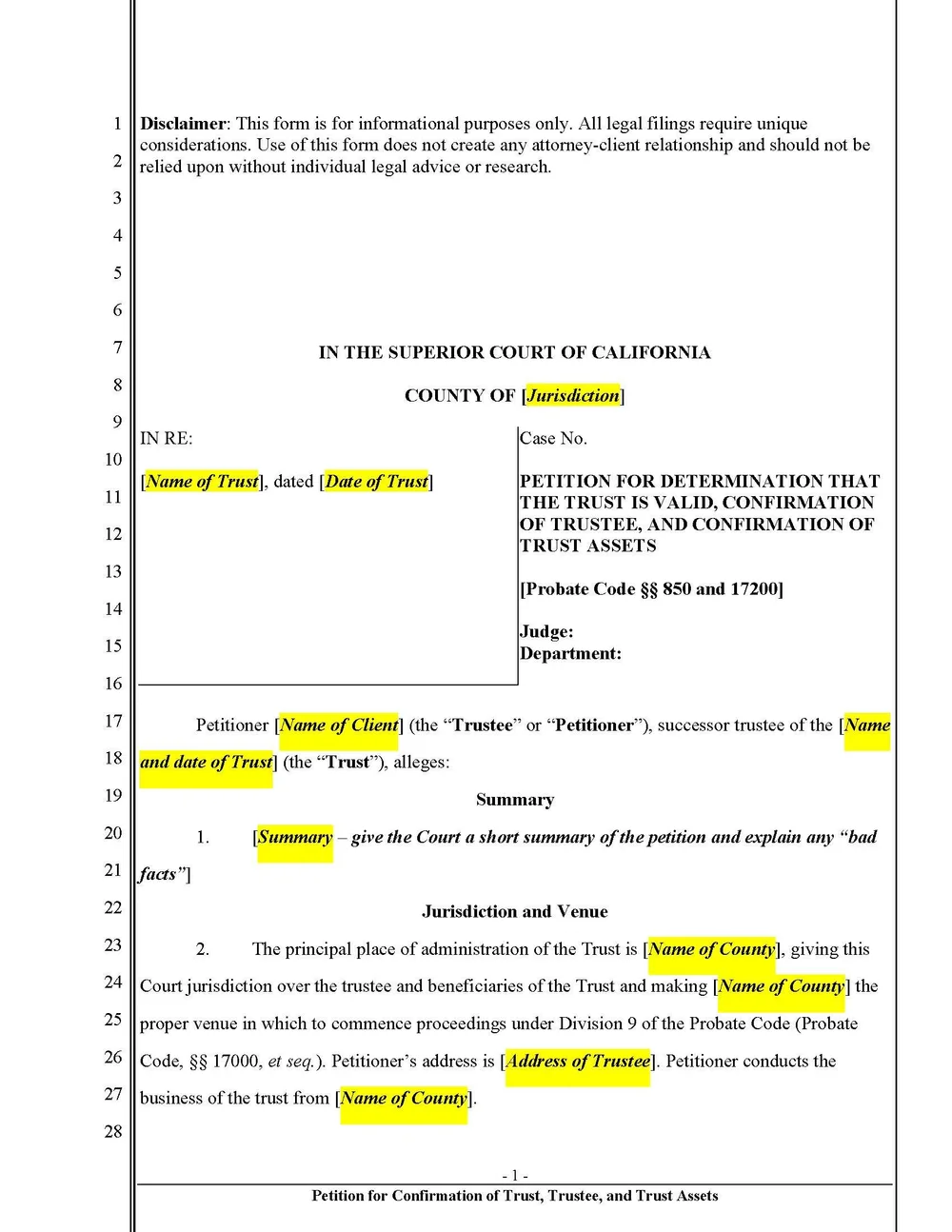
- A basic sample petition (fillable PDF, 5 pages) for the simplest case: one house listed in the trust by its address, a recorded deed into the settlor’s name, and a family that agrees. How to fill it out is explained below.
- Five complete sample filings built from fictional facts, for attorneys and paralegals: the verified petition, exhibits, notice papers, proofs of service and the proposed order, each with practice notes. They are described below and chapter by chapter in our Heggstad petition practice guide.
For what a Heggstad petition is, what it costs and how long it takes, start with our Heggstad petition page.
Ravi Patel also wrote and maintains the Heggstad petition template in Lexis Practical Guidance, Petition for Confirmation of Trust Property (Heggstad Petition) (Lexis subscription required).
Your samples are ready
Each link works for seven days, so save the files you need.
Preview only: nothing was sent or saved. On the live site this form stores the name and email and then shows this download button.
These samples are general information, not legal advice. Every estate is different; consult an attorney before filing anything in court.
The five sample filings
Each filing is complete and every page is marked SAMPLE. Every person, trust, property, account and case number in them is invented.
- No. 1, The Classic (Los Angeles County). A house listed on Schedule A by street address, one settlor, and an heir the trust leaves out. 36 pages.
- No. 2, The General Assignment (Alameda County). No schedule entry at all: a general declaration, a general assignment, and a grantor and grantee index search. 38 pages.
- No. 3, The Accounts (Orange County). A checking account, a certificate of deposit and a brokerage account that never left the settlor’s name. 47 pages.
- No. 4, The Refinance (San Diego County). Into the trust in 2009, out for a refinance in 2019, and back onto the schedule by amendment in 2021. 47 pages.
- No. 5, The Ex Parte (Santa Clara County). A condominium in escrow, a title company that wants an order, and consents from everyone entitled to notice. 40 pages.
The practice guide lists what each one shows, from venue to the recording cover sheet.
How to fill out the basic sample petition
The basic sample fits the simplest Heggstad petition for real property: the trust specifically lists the property, a grant deed clearly transferred title to a single settlor, no deed into the trust was ever recorded, and everyone interested in the matter consents. Other facts may need significant revisions. Use of the form does not create a confidential or attorney-client relationship of any kind.
Page 1: your information and the court
In the top left corner, list your name and contact information: your name (with “pro per” if you are filing without an attorney), your address, phone number and email address.
The proper county for a Heggstad petition is generally the county where the successor trustee lives, not the county where the settlor died or where the property is located. Filing in the wrong county can delay the petition by months.
Page 2: the general allegations
The general allegations give the court a clear, direct account of the key facts. The court will want to see a grant deed that transferred the property to the settlor and that predates the trust. The petitioner’s word alone is not enough: the court needs objective evidence that the settlor owned the property when the trust was signed.
The trust must identify the property in a way that shows the settlor meant to hold it in the trust. The form assumes the trust lists the property on a schedule of trust assets by its street address. A more general description can also work, for example a declaration covering “all property” when a recorded deed shows the settlor owned the property when the trust was signed. Our article on descriptions of property explains when a general description is enough.
Attach a copy of the trustee’s notice under Probate Code section 16061.7. That notice starts a 120-day period for anyone who receives it to contest the trust. The period does not have to run out before you file, but the court will want to see that the notice went out before the hearing.
Page 3: notice
Notice is a critical part of any Heggstad petition, and Probate Code section 851 sets the rules. In general, notice of the hearing goes to every beneficiary and trustee of the trust and to the settlor’s legal heirs, who are usually the same people. An heir the trust leaves out must be personally served, and so must anyone else who holds, occupies or claims an interest in the property, including lenders, banks and tenants. Others can generally be served by first-class mail.
Page 4: the request
The request should include the full legal description of the property, copied word for word from a reliable source, usually the most recent deed. Legal descriptions are technical, so copy carefully, and add the assessor’s parcel number at the end.
Page 5: prayer and verification
The prayer at the end tells the court exactly what orders you are asking for. Restate the legal description there so the order can be recorded and clear the title. The petitioner then signs the verification, confirming that the facts in the petition are true and correct.
Rather have us file it for you?
Heggstad petitions are flat-fee, and no legal fees are due until you have a signed court order in hand.